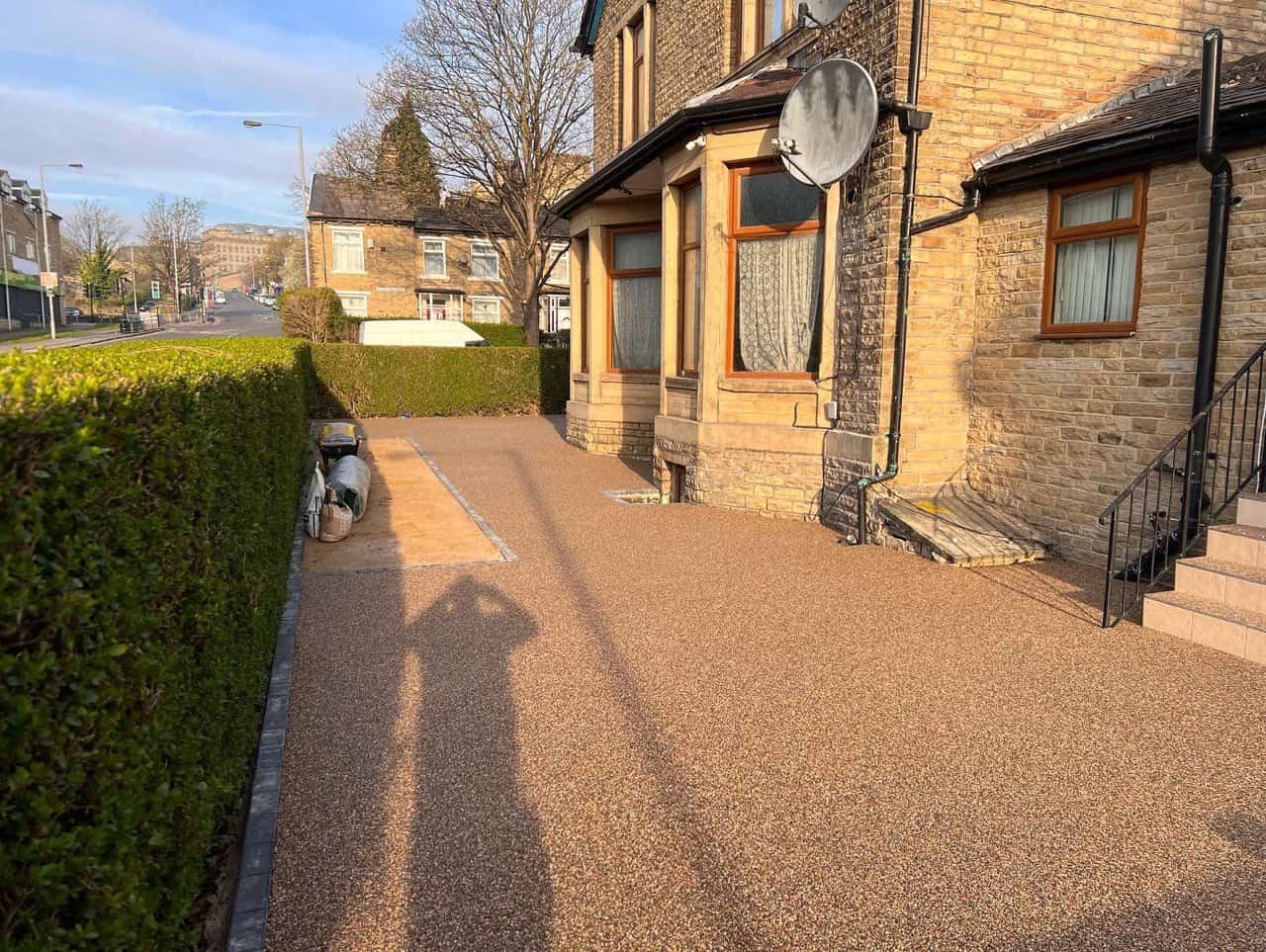
Garden paths have an important practical role. They connect entrances, patios, seating areas and other frequently used parts of an outdoor space while helping people move around without repeatedly walking across lawns or planting areas. For a path to work well, however, the surface needs to be comfortable underfoot, appropriately constructed and suited to the shape of the garden.
Resin bound surfacing is particularly well suited to garden walkways because the aggregate and resin are mixed together before application, creating a continuous surface without the loose stones associated with some traditional aggregate paths. The result can be smooth, consistent and suitable for straight routes as well as curved or more detailed garden layouts.
For homeowners in Dartford, Kent, a professionally installed resin bound path can provide a practical way to improve movement through the garden while creating a neat connection between different outdoor areas. The quality of the finished path, however, depends on much more than the resin surface itself. Preparation, base condition, levels, drainage and edge detailing all contribute to long-term performance.
What Makes Resin Bound Surfacing So Suitable for Garden Paths?
A resin bound path combines decorative aggregate with resin to create a bonded surface. Because the aggregate is held together rather than remaining loose, the completed walkway can provide a consistent finish across its full width.
Its advantages for garden paths can include:
- A smooth and continuous walking surface
- No loose aggregate under normal use
- Flexibility for curved and shaped paths
- A neat appearance around garden features
- Consistent transitions between outdoor areas
- A range of aggregate appearances
- Defined edges and borders
- Straightforward integration with patios and entrances
- A relatively easy surface to keep tidy
- Potential permeability when installed as part of an appropriate permeable construction
These benefits depend on correct installation and a suitable supporting base.
Resin Bound Paths Create a Continuous Walking Surface
One of the main reasons resin bound surfacing works particularly well for paths is the continuity of the finished surface.
Individual paving units are not required across the main walkway, and loose decorative stone is not left free to move beneath foot traffic.
Instead, the aggregate forms a bonded surface.
This creates a consistent route through the garden and can be particularly useful where the objective is to make movement between different outdoor areas feel straightforward and natural.
The Aggregate Remains Bonded Together
Loose gravel paths can provide an attractive garden finish, but the individual stones naturally move when walked over.
Material can migrate towards the edges or become displaced into surrounding areas.
Resin bound construction works differently.
Because the selected aggregate is mixed with resin before being laid, the individual stones are held together within the finished surface.
This creates the visual texture of aggregate without the same degree of loose material moving around the garden.
A Smooth Path Can Make Everyday Garden Use Easier
Garden paths may be used many times throughout an ordinary day.
They can connect a rear entrance with a patio, lead towards another part of the garden or simply provide a defined route across the outdoor space.
A relatively smooth, even surface makes these journeys more comfortable.
Good installation should minimise unnecessary changes in level and create a consistent route rather than leaving users to negotiate loose, unstable or noticeably irregular areas.
Resin Bound Surfacing Works Well for Curved Paths
Not every garden path needs to follow a perfectly straight line.
Curved routes can work particularly well where a path needs to move around lawns, planting beds or established garden features.
Resin bound surfacing can accommodate these shapes because the material is installed as a continuous layer within prepared boundaries.
This flexibility allows the path design to respond to the garden rather than forcing the outdoor space around rigid surface dimensions.
Gentle Curves Can Create More Natural Routes
The practical route through a garden should influence the path layout.
Where people naturally move diagonally or around existing features, forcing a sharply angled walkway can sometimes make the route feel less convenient.
A resin bound path can follow gentle curves and gradual changes in direction.
This makes it possible to create a walkway that looks integrated with the surrounding garden while still providing a clearly defined route.
Straight Resin Paths Can Create a Clean Finish
Although resin bound surfacing is useful for curved designs, it can work equally well for straight garden paths.
A defined walkway between two points can create a simple, organised appearance.
Careful edge preparation helps establish clean lines along both sides.
The result can complement contemporary garden layouts as well as more traditional outdoor spaces, depending on the aggregate and surrounding materials selected.
Defined Edges Are Important to the Finished Path
The edges of a resin bound path contribute significantly to its overall appearance.
A poorly defined boundary can make even a high-quality surface look unfinished.
Suitable edge restraints establish the path dimensions before the resin bound material is installed and provide a clear transition between the walkway and surrounding garden.
They are particularly important around curves, corners and areas where the path meets lawns or planting beds.
Good Edging Also Supports the Path Layout
Edging is not purely decorative.
It helps define where the resin bound surface begins and ends and contributes to the overall construction.
This is particularly useful where the walkway passes directly alongside soft landscaping.
A well-planned boundary helps keep the surface visually distinct while maintaining the intended width and shape throughout the route.
Resin Paths Can Connect Different Garden Areas
One of the most useful roles of a garden path is creating connections.
A resin bound walkway can provide a clear route between areas that might otherwise feel disconnected.
For example, the path can lead from the property towards a patio or continue between frequently used parts of the garden.
Using a consistent surface along the route can make the complete outdoor layout feel more organised.
Path Width Should Reflect How the Walkway Will Be Used
The material is only one part of designing a practical garden path.
Width also matters.
A walkway intended primarily as a simple route through the garden may require different proportions from one serving as a main access route.
Planning this before installation avoids creating unnecessary narrow points or awkward sections.
The objective should be to provide enough usable surface for the intended purpose while keeping the path proportionate to the surrounding garden.
Good Path Design Avoids Unnecessary Obstacles
A walkway should make movement easier rather than creating an inconvenient route.
The position of steps, corners, changes in width and transitions between surfaces should therefore be considered during planning.
A resin bound path can be shaped around existing features, but that flexibility should be used to improve practicality.
The most effective design generally follows a logical route that people will actually want to use.
Surface Levels Matter for Comfortable Walking
A visually attractive path can still be inconvenient if the levels have not been prepared correctly.
Unexpected dips, raised transitions or abrupt changes can interrupt an otherwise smooth walkway.
Careful preparation helps create consistent levels throughout the path.
Particular attention should be given to points where the resin surface meets entrances, patios or other existing surfaces so that the transitions feel deliberate.
The Supporting Base Is Fundamental
The appearance of a resin bound path is determined by the finished aggregate surface, but its performance depends heavily on what lies underneath.
A resin system should be installed over a suitable, stable base.
If the supporting construction moves, settles or deteriorates, problems can eventually become visible at surface level.
For this reason, professional installation begins with assessing and preparing the foundation rather than treating the resin layer as an independent decorative covering.
Resin Cannot Correct an Unstable Foundation
A new surface should not be used simply to disguise significant problems underneath.
If an existing path contains substantial movement, unstable areas or poor levels, covering it without addressing those issues may allow them to influence the new finish.
Preparation should therefore reflect the actual condition of the site.
Where the supporting construction is unsuitable, appropriate groundwork can create the stable platform needed for the resin bound surface.
Existing Paths Need Assessment Before Resurfacing
Where a garden already contains an old walkway, it may be tempting to assume that resin can simply be installed directly over it.
Whether this is appropriate depends on the condition and suitability of the existing construction.
A stable surface may potentially provide part of the required preparation, while cracked, moving or poorly constructed areas can need further work.
Assessing the existing path first helps determine the correct approach.
Compaction Helps Create a Consistent Foundation
Ground preparation is particularly important where a new path is being constructed from the ground up.
Supporting materials need to be placed and compacted appropriately.
Soft or inconsistently prepared sections can behave differently under use and changing conditions.
A well-prepared base provides more consistent support along the full route, helping the finished surface perform as intended.
Drainage Should Be Considered During Path Design
Water management is an important part of any external surface.
The surrounding ground, path levels and direction of water movement should all be considered during installation.
Resin bound surfacing can form part of a permeable system when the complete construction beneath it is also suitable for water to pass through.
The finished resin layer alone should not be assumed to solve every drainage issue.
Permeability Depends on the Complete Construction
Resin bound surfacing is often associated with permeability because the bonded aggregate contains interconnected voids through which water may pass.
However, this characteristic needs to be understood in context.
If the material is installed over an impermeable base, water cannot simply continue passing freely through the entire construction.
A genuinely permeable path therefore requires suitable consideration of the layers beneath the resin as well as the finished surface itself.
Correct Levels Still Matter on Permeable Surfaces
Even where a path is designed as part of a permeable construction, careful levels remain important.
The surrounding garden needs to work effectively with the new walkway.
Low areas, poorly planned transitions or unsuitable adjoining ground can still influence how water behaves around the path.
Professional preparation considers the complete area rather than relying on the resin material alone.
Resin Bound Paths Avoid Loose Stones Spreading Into Lawns
Where loose aggregate paths meet grass, individual stones can gradually move beyond the edge.
This can create additional tidying around the boundary.
Because resin bound aggregate remains bonded within the surface, this type of migration is significantly reduced during ordinary use.
For paths positioned directly alongside lawns, this can help maintain a cleaner distinction between the walkway and surrounding grass.
Planting Beds Can Be Neatly Defined Alongside the Path
Resin bound surfacing can also work effectively beside borders and planted areas.
Defined edges create a clear separation between the path and soil.
Curves can be used to follow the shape of planting beds, while straighter edges can create a more structured garden layout.
The path therefore contributes not only to movement but also to the organisation of the outdoor space.
Resin Bound Paths Can Complement Patios
A garden path often finishes at another hard-surfaced area.
Where resin bound surfacing is used alongside a patio, careful planning can create a deliberate transition between the two.
The surfaces do not necessarily need to match exactly.
A contrasting path can help define movement, while a complementary aggregate can create greater visual continuity.
The important consideration is how the levels, edges and materials meet.
Paths Can Also Connect With Driveway Areas
Where the garden layout brings pedestrian routes towards a driveway, the transition should be carefully considered.
A resin bound walkway can provide a visually consistent connection, particularly where resin surfacing is also used elsewhere around the property.
However, the construction requirements for a pedestrian path and an area carrying vehicles can differ.
The supporting base should always reflect the loads that the particular surface is expected to receive.
Pedestrian Paths Have Different Requirements From Vehicle Surfaces
A resin bound garden walkway is primarily designed around foot traffic.
Driveways must accommodate substantially different loading.
This distinction is important when planning adjoining surfaces.
Even if the same aggregate finish is selected, the supporting construction should be appropriate for the intended use of each area.
Professional installation considers these practical differences rather than treating every resin surface as identical.
Aggregate Choice Influences the Finished Appearance
Resin bound surfacing uses natural or decorative aggregate to create the visible finish.
Different aggregate combinations can alter the overall character of the path.
The selection should work with the property, surrounding hard landscaping and garden rather than being considered in isolation.
For a long walkway, the aggregate can have a particularly noticeable visual effect because it creates a continuous feature running through the outdoor space.
Consistency Matters Across Long Paths
Long garden paths can reveal inconsistencies more readily than small surface areas.
Changes in width, uneven edging or irregular surface levels become increasingly noticeable along an extended route.
Careful installation helps maintain a consistent finish throughout.
This involves planning the route and preparing the complete area properly before the final resin bound surface is installed.
Borders Can Add Definition Without Making the Design Complicated
A path does not need elaborate detailing to look considered.
A simple contrasting border can sometimes provide enough definition to distinguish the walkway from surrounding surfaces.
Borders can also emphasise curves or reinforce straight lines.
The design should remain appropriate for the scale of the garden rather than adding unnecessary visual elements that make a practical path feel overly complicated.
Smooth Does Not Mean Completely Texture-Free
A resin bound path can create a smooth, consistent walking surface while retaining the natural texture of its aggregate.
This distinction is important.
The material does not need to resemble a perfectly flat indoor floor to provide a comfortable garden walkway.
Its advantage lies in keeping the aggregate securely bonded and creating a relatively even surface without the significant movement associated with loose stone.
Good Installation Produces a Consistent Surface
The quality of resin bound surfacing depends on careful preparation and application.
Aggregate and resin need to be correctly combined, and the material must be installed consistently across the prepared area.
Irregular application can affect the appearance and performance of the finished path.
Professional installation therefore involves controlled working practices from preparation through to the final surface rather than focusing solely on the decorative aggregate.
Junctions Require Careful Detailing
A garden path rarely exists completely independently.
It may meet doorways, patios, steps, drainage features or other hard landscaping.
These junctions deserve careful attention.
Changes between materials should be neat, levels should make practical sense, and the resin surface should terminate against suitable boundaries.
Good detailing can make the difference between a path that simply covers the ground and one that feels properly integrated with the garden.
Existing Steps Need to Be Considered in the Layout
Where a garden changes level, steps may already form part of the route.
The resin bound path needs to integrate appropriately with these features.
Simply surfacing the flatter areas without considering the transitions can create an inconsistent walkway.
Planning the route as a complete journey through the garden helps ensure that changes in level are incorporated logically.
A Resin Path Can Help Define Frequently Used Routes
Without a dedicated walkway, people often follow the shortest route across lawns or other garden areas.
Repeated foot traffic can gradually create an informal track.
Installing a defined resin bound path establishes a clear surface for regular movement.
This can make the garden feel better organised while providing a durable route designed specifically for pedestrian use.
Maintenance Is Generally Straightforward
Like any outdoor surface, resin bound paths will accumulate ordinary dirt and organic material over time.
Routine maintenance can help retain a tidy appearance.
Keeping the surface clear of accumulated debris also allows its condition to remain visible.
Any unusual movement, damage or changes can then be investigated rather than being hidden beneath prolonged surface build-up.
A Tired Appearance Does Not Always Mean the Path Has Failed
Outdoor surfaces naturally change in appearance as they are exposed to everyday conditions.
A path looking less fresh than when first installed does not necessarily indicate structural deterioration.
Surface condition and underlying performance should be considered separately.
Cleaning may address ordinary contamination, while cracks, movement or settlement can indicate issues that deserve closer assessment.
Localised Damage Should Be Investigated Rather Than Ignored
If a resin bound path develops cracking, movement or a noticeable depression, it is useful to determine why.
The visible surface may only be showing the effect of a problem within the supporting construction.
Simply covering or disguising the affected area without understanding the cause can allow the issue to return.
Assessment helps establish whether the defect is genuinely superficial or related to movement underneath.
A Well-Planned Path Can Make the Garden Feel More Connected
A garden path has both a practical and visual function.
It guides movement while linking separate areas into a more coherent layout.
Resin bound surfacing is particularly useful in this respect because it can continue smoothly along straight sections, around curves and between different garden features.
When the route, proportions and surrounding landscaping are considered together, the path can feel like an intentional part of the garden rather than an addition placed over an inconvenient area of ground.
Why Professional Resin Bound Path Installation Matters
The attractive aggregate finish is only the visible part of a successful resin bound path.
The quality of the supporting base, ground preparation, levels, edge restraints, drainage approach and application all influence the completed walkway.
At Dartford Resin Driveways, we consider how the path will be used and how it needs to connect with the surrounding garden before determining the appropriate construction.
For homeowners in Dartford, Kent, this helps create a resin bound walkway that combines a smooth, consistent finish with the practical preparation required beneath the surface.
Conclusion
Resin bound paths are particularly well suited to creating smooth garden walkways because the aggregate is bonded together to form a continuous surface without the loose material associated with traditional gravel paths. The material can accommodate straight routes, gentle curves and detailed garden layouts while creating clearly defined connections between different outdoor areas.
The finished resin surface is only part of a successful installation. A suitable base, careful preparation, consistent levels, appropriate edging and considered drainage all contribute to how well the walkway performs. These elements should be planned around the actual garden and intended use rather than treating resin as a surface that can simply be applied over any existing ground.
If you are considering a new resin bound garden path in Dartford, Kent, contact Dartford Resin Driveways. We can assess the area and recommend an appropriate approach for creating a practical, well-integrated walkway that suits your outdoor space.
Call us on: 01322 952299
Click here to find out more about Kent Resin Drives
Click here to complete our contact form and see how we can help with your driveway needs.